Kathina: Weaving Generosity, Unity and Lasting Community Bonds
Discover how the annual Kathina Ceremony strengthens Buddhist communities, nurtures spiritual growth, and inspires generosity that reaches far beyond the temple.
Every year, Buddhist communities around the world gather to celebrate one of the most meaningful occasions in the Theravāda Buddhist tradition: the Kathina Ceremony.
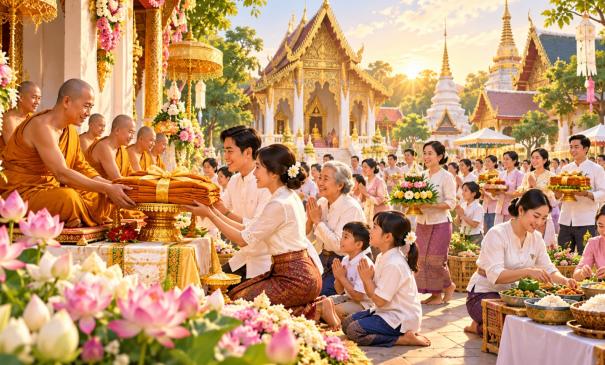
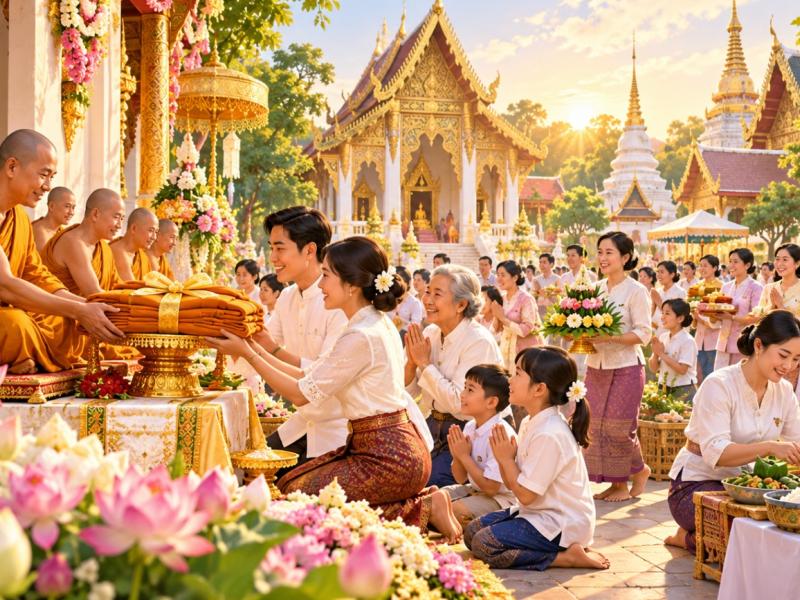
At first glance, Kathina may appear to be a colourful religious event involving offerings, chanting, traditional ceremonies, and the presentation of a robe to the Buddhist monastic community. Yet its deeper significance reaches far beyond these visible activities.
Kathina is not simply a ceremony of giving. It is an opportunity to bring hearts together, strengthen relationships, cultivate wholesome qualities, and build a compassionate community.
It reminds us that when people unite with generosity and a shared purpose, even the smallest contributions can create something extraordinary.
The Spiritual Significance of Kathina
The Kathina Ceremony takes place following the annual three-month rains retreat (Vassa), during which Buddhist monks traditionally remain in one location, dedicating themselves to meditation, study, and spiritual development.
After this period, lay devotees have the opportunity to express gratitude and support for the monastic community through the offering of robes and other necessities.
In the Theravāda Buddhist tradition, Kathina is especially significant because it combines generosity (Dāna), moral conduct (Sīla), and spiritual cultivation (Bhāvanā).
The offering of the Kathina robe is an act of respect and gratitude towards the Sangha, whose members dedicate their lives to preserving and sharing the teachings of the Buddha.
However, the true value of Kathina is not determined by the financial cost of the offerings or the grandeur of the celebration. Its spiritual value lies in the wholesome intentions, generosity, and sincere dedication of those who participate.
One Thread, One Robe, One Community
Imagine a single thread.
It may be beautiful, but by itself it cannot create a robe. It is delicate and easily broken.
However, when hundreds of threads are woven together, they form a strong and beautiful piece of cloth.
A Buddhist community is much like that robe.
Each person is a thread, bringing unique abilities, experiences, resources, and acts of kindness.
One family prepares food. Another offers flowers. A group of young people cleans the temple. Children help with decorations. Some devotees contribute financially, while others donate their time, energy, and skills.
Individually, these actions may seem small. Together, they create something deeply meaningful.
The Kathina Ceremony teaches us that the strength of a Buddhist community does not depend on the wealth or influence of a few individuals. It grows through the shared generosity, commitment, and harmony of everyone.
When people work together towards a wholesome purpose, they create more than a successful ceremony. They create friendships, mutual understanding, and a sense of belonging.
1. Strengthening Community Unity and Harmony
One of the greatest benefits of organising a Kathina Ceremony is the opportunity to bring people together.
In everyday life, families are often occupied with work, education, and personal responsibilities. Opportunities for meaningful community engagement can become limited.
Kathina creates a shared purpose that encourages people to connect beyond their usual social circles.
During the preparations, devotees work together, solve problems, share responsibilities, and support one another.
People who rarely speak may become friends. Families who previously had little interaction may develop closer relationships. Younger and older generations have opportunities to learn from one another.
More importantly, working together provides practical opportunities to develop patience, tolerance, understanding, and forgiveness.
Differences of opinion may arise during any large community event. Yet these challenges can become valuable opportunities to practise the Buddha's teachings on harmonious living.
The success of Kathina should therefore be measured not only by how beautifully the ceremony is conducted, but also by how much closer the community becomes through organising it.
2. Cultivating Generosity and Reducing Self-Centredness
Generosity (Dāna) is one of the foundational practices in Buddhism.
It encourages us to move beyond selfishness and attachment by recognising the joy of sharing what we have with others.
Kathina provides a wonderful opportunity to practise generosity in many different forms.
Some people may offer material gifts. Others may dedicate their time, professional skills, physical effort, or knowledge.
A person who spends several hours cleaning the temple with sincere devotion may be practising generosity just as meaningfully as someone who makes a substantial financial contribution.
The Buddha emphasised the importance of intention (Cetanā) in understanding the moral significance of our actions.
Therefore, no devotee should feel that their participation is insignificant simply because they cannot afford an expensive offering.
The beauty of generosity is not measured solely by the size of the gift, but by the sincerity and wholesomeness of the heart that offers it.
When generosity becomes a shared community value, people begin to think less about what they can receive and more about what they can contribute.
This transformation can benefit families, friendships, and society long after the ceremony has ended.
3. Inspiring the Next Generation
Kathina offers a valuable educational experience for children and young people.
Rather than learning Buddhist values only through books or classroom discussions, children can experience those values through practical activities.
They may help prepare offerings, arrange flowers, welcome guests, distribute refreshments, or participate in suitable temple activities.
Through these experiences, they can develop respect for others, responsibility, teamwork, gratitude, and compassion.
Children also learn an important lesson by observing their parents and elders.
When adults serve the community with joy and dedication, children see that Buddhism is not merely something to study. It is a way of life.
A child who participates in Kathina today may become a dedicated volunteer, community leader, or supporter of the Buddha's teachings in the future.
In this way, Kathina helps transmit Buddhist values from one generation to the next, preserving not only religious customs but also the living spirit of generosity and service.
4. Supporting the Sangha and Preserving the Dhamma
The relationship between the monastic Sangha and lay devotees has been central to Buddhist communities for more than 2,500 years.
Lay supporters help provide the material necessities that allow monastics to continue their spiritual practice and religious responsibilities.
In turn, the Sangha preserves, studies, practises, and shares the teachings of the Buddha.
Kathina celebrates this relationship of mutual support.
By offering robes and essential requisites, devotees help sustain the conditions in which Buddhist teachings, meditation, and moral education can continue.
This support has a wider influence on the community.
Temples can serve as centres for Dhamma education, meditation, spiritual guidance, cultural preservation, and compassionate service.
Therefore, supporting Kathina is also one way of supporting the continued availability of the Buddha's teachings for present and future generations.
5. Building a Stronger and More Compassionate Society
The positive influence of Kathina need not end at the temple gates.
The qualities developed through participating in the ceremony can shape how we treat others in daily life.
A person who learns patience while preparing the ceremony may become more understanding at home.
Someone who experiences the joy of volunteering may become more willing to assist a neighbour.
A child who witnesses generosity may become more sensitive to the needs of others.
A community that learns to cooperate during Kathina may be better prepared to support its members during times of illness, bereavement, financial difficulty, or personal hardship.
These outcomes are not automatic. They grow when the values celebrated during Kathina are carried into everyday behaviour.
The greatest lasting impact of Kathina is realised when the spirit of generosity becomes a habit, compassion becomes an attitude, and unity becomes a way of living.
6. Creating a Sense of Belonging
In modern society, many people experience loneliness, isolation, and a lack of meaningful connection.
For Buddhist families living away from their countries of origin, community events can also provide valuable opportunities to maintain cultural and spiritual connections.
Kathina brings together people from different ages, professions, and backgrounds within a shared spiritual environment.
For elderly devotees, it may offer companionship and opportunities to contribute their knowledge.
For families, it creates meaningful occasions to spend time together.
For young people, it provides opportunities for friendship, service, and leadership.
For newcomers, it can offer a welcoming introduction to the Buddhist community.
When everyone is encouraged to participate according to their abilities, Kathina can strengthen a powerful feeling:
“This is my community. I belong here, and I have something valuable to offer.”
That sense of belonging is among the most meaningful gifts a religious community can cultivate.
7. The True Measure of a Successful Kathina
A successful Kathina Ceremony is often remembered for its beautiful decorations, generous offerings, delicious food, and large gathering of devotees.
These are wonderful aspects of the celebration.
Yet we should also ask deeper questions.
Did our preparations bring people closer together?
Did we welcome newcomers and appreciate the contributions of volunteers?
Did our children learn something meaningful about generosity?
Did we practise patience and understanding when difficulties arose?
Did the experience inspire us to continue serving the temple and wider community?
And perhaps most importantly:
Did we become kinder, more generous, and more united through our participation?
If the answer is yes, the ceremony has achieved something truly valuable beyond the offerings themselves.
A Call to Every Devotee: Become a Thread in the Robe of Unity
As we prepare for our Kathina Ceremony, let us remember that this sacred occasion belongs to the entire community.
You do not need to be wealthy to participate.
You do not need special qualifications or extraordinary abilities.
You simply need a willing heart and a sincere intention to do something wholesome.
If you can offer financial support, do so with joy.
If you can volunteer your time, offer it generously.
If you can prepare food, arrange flowers, help with transport, welcome guests, or assist with cleaning, your contribution is valuable.
If you are young, bring your energy and enthusiasm.
If you are elderly, share your experience, encouragement, and wisdom.
Let us make room for everyone, ensuring that nobody feels excluded or pressured because of their circumstances.
When we come together in this spirit, Kathina becomes much more than an annual religious celebration.
It becomes a living expression of the Dhamma.
Conclusion: A Ceremony That Ends, a Blessing That Continues
The Kathina Ceremony may last only a day, but its influence can continue throughout the year.
The offerings will be completed. The decorations will be removed. The guests will return home.
Yet the friendships created, the generosity practised, the lessons learned, and the harmony developed can remain with us.
The most beautiful achievement of Kathina is not only the robe offered to the Sangha, but also the invisible robe of compassion, gratitude, and unity woven around the whole community.
One thread alone may be fragile. Together, thousands of threads create a strong and beautiful robe.
Likewise, one act of kindness may appear small, but thousands of acts of kindness can transform an entire community.
Let us celebrate Kathina with joyful hearts, generous hands, and a shared commitment to the Dhamma.
Together in generosity. Together in harmony. Together in the Dhamma.
May the wholesome merits of our generosity and dedication support the happiness, peace, and well-being of all beings.
Sādhu! Sādhu! Sādhu!
Dhamma reflection inspired by the Theravāda Buddhist Kathina tradition and the principles of generosity, gratitude, and harmonious community life.